
Client experience
A better client experience does more than collect information.
Traditional estate-planning worksheets can tell clients what information to gather. They still leave the client to find it, make sense of it, decide what deserves attention, and keep the process moving.
Josda takes a more active role — guiding the work, bringing information in, helping clients understand what they have, prompting useful actions, and providing support as they build a stronger estate picture over time.
Beyond the worksheet
A static worksheet can organize the questions. Software can help clients answer them.
Estate planning asks households to do unfamiliar work across financial accounts, legal documents, insurance, ownership, beneficiary arrangements, digital access, records, family roles, and more.
A worksheet can tell the client what to think about.
It cannot do the work alongside them.
Static worksheet
- Present questions
- Capture answers
- Provide a checklist
Useful, but passive.
Active software experience
- Bring information in
- Track what is already known
- Surface the next useful task
- Answer questions in context
- Prompt useful action
- Turn progress into a more useful estate picture
The client should not have to be the workflow engine.
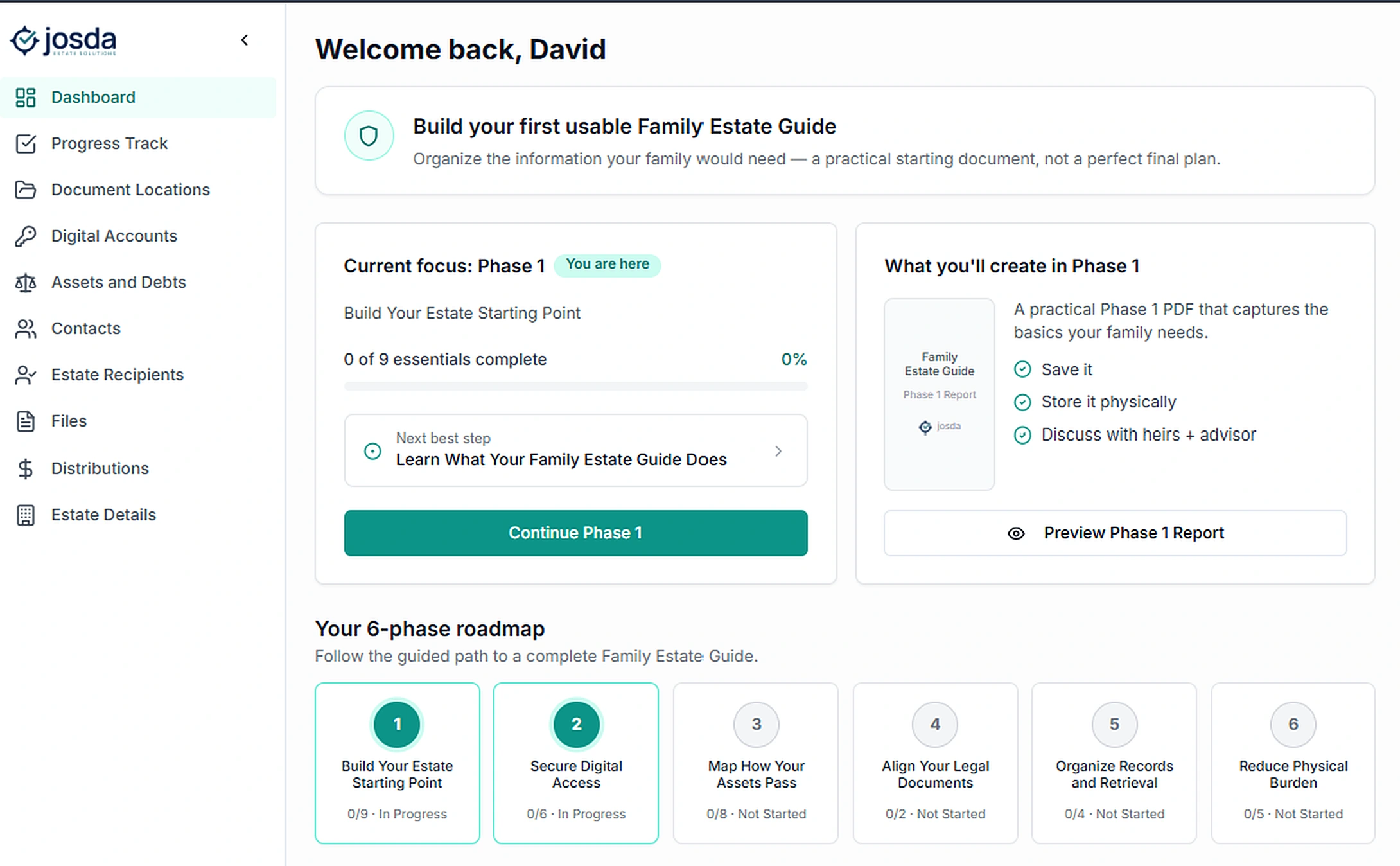
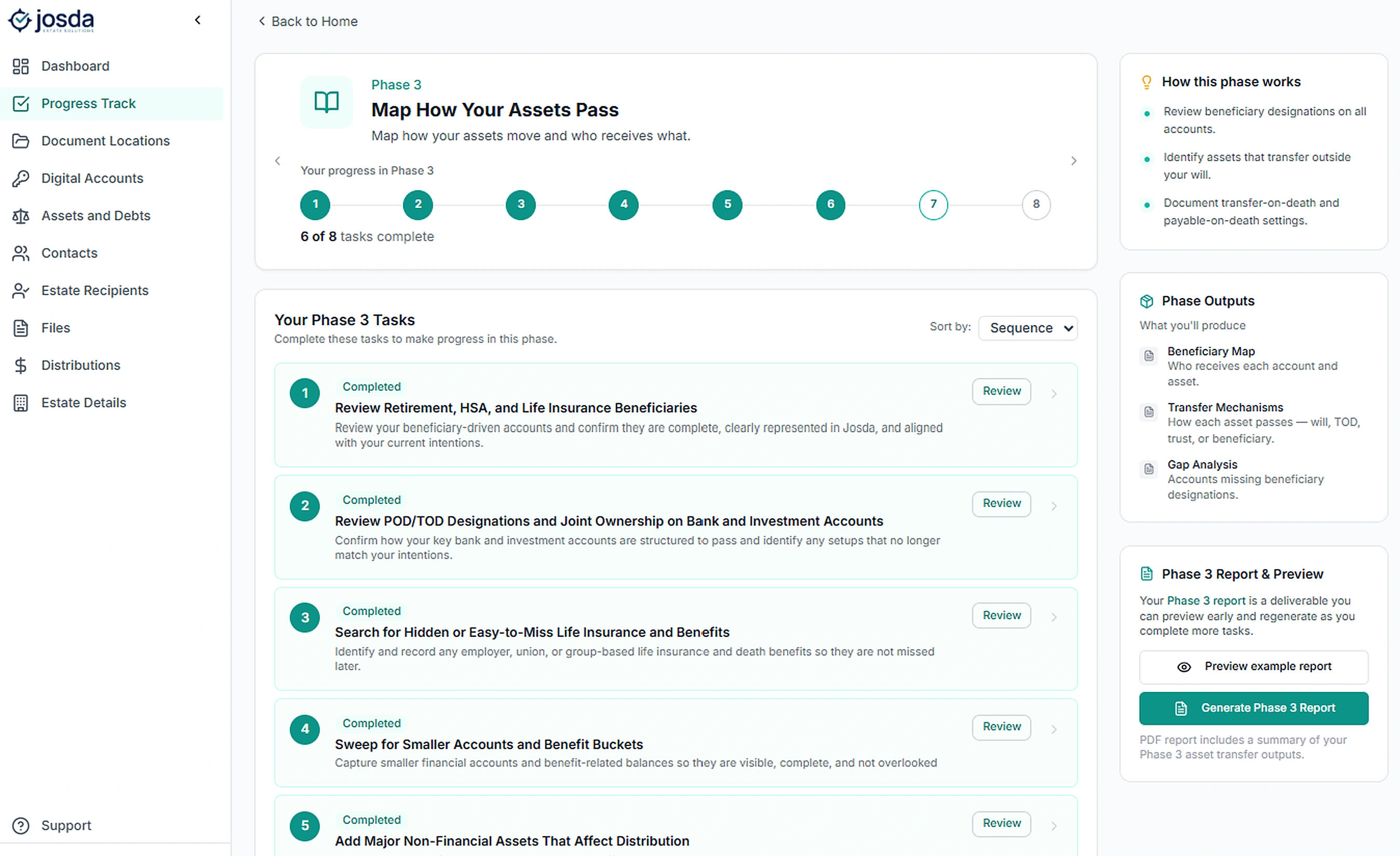
Guided progress
Give clients a clear next step instead of a giant project.
Josda breaks a broad estate-planning exercise into focused milestones and specific tasks so clients can work on one useful area at a time.
See the current focus
Clients understand what part of the estate picture they are working on now.
Know the next useful task
The process keeps the next step clear instead of leaving the household with an open-ended checklist.
See progress accumulate
Clients can see what they have already completed and what can wait.
Less manual work
Don’t ask clients to recreate information the software can help bring in.
Where possible, Josda reduces re-entry by letting clients connect, import, or upload information they already have and then review what has been organized.
Link financial accounts
Bring relevant account and liability information into the estate picture without requiring every detail to be entered manually.
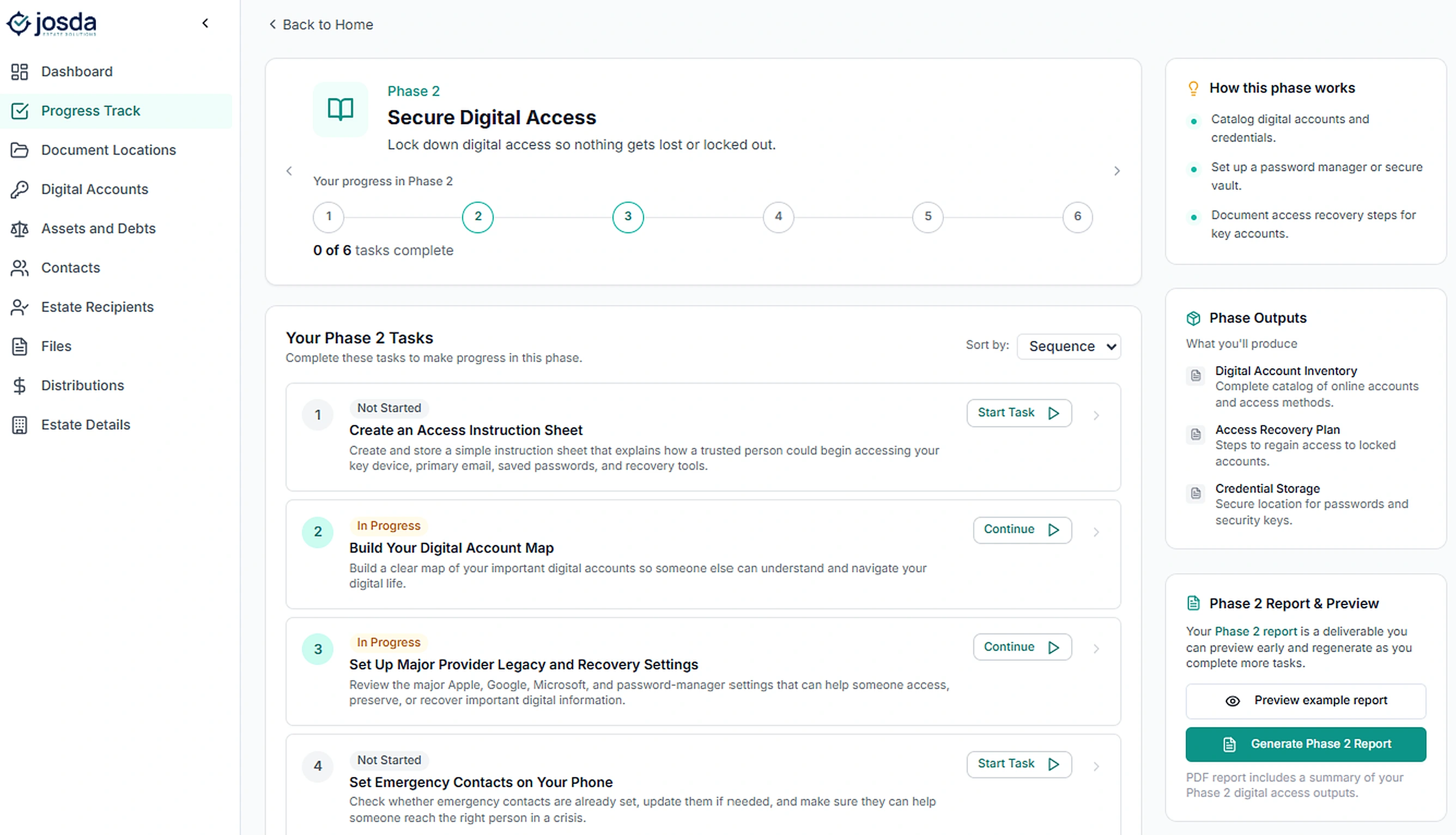
Import digital-account information
Help clients organize important digital relationships without importing passwords.
Upload important documents
Bring wills, trusts, insurance materials, statements, and other relevant records into the process.
Add what is missing
Guided forms remain available when information needs to be entered manually.
Private AI support
Give clients a helpful assistant inside their estate information.
Clients can upload wills, trusts, financial documents, insurance materials, and other relevant records, then use the Planning Assistant to help locate information, understand what they are looking at, and work through the next step.
- “Where does my trust name the successor trustee?”
- “What beneficiary information is shown in this document?”
- “Which accounts have I not reviewed yet?”
- “What should I gather before I talk with my advisor?”
Josda helps clients navigate and organize their information. It does not replace their attorney, financial advisor, accountant, or other professionals.
From information to action
The goal is not just to document the estate. The process should leave it better than it found it.
As clients work through Josda, they are not only recording what exists. The process can help surface actions that improve the estate picture now — while also making the family better prepared later.
Review beneficiary arrangements
Surface retirement, insurance, POD/TOD, and other beneficiary relationships that may deserve attention.
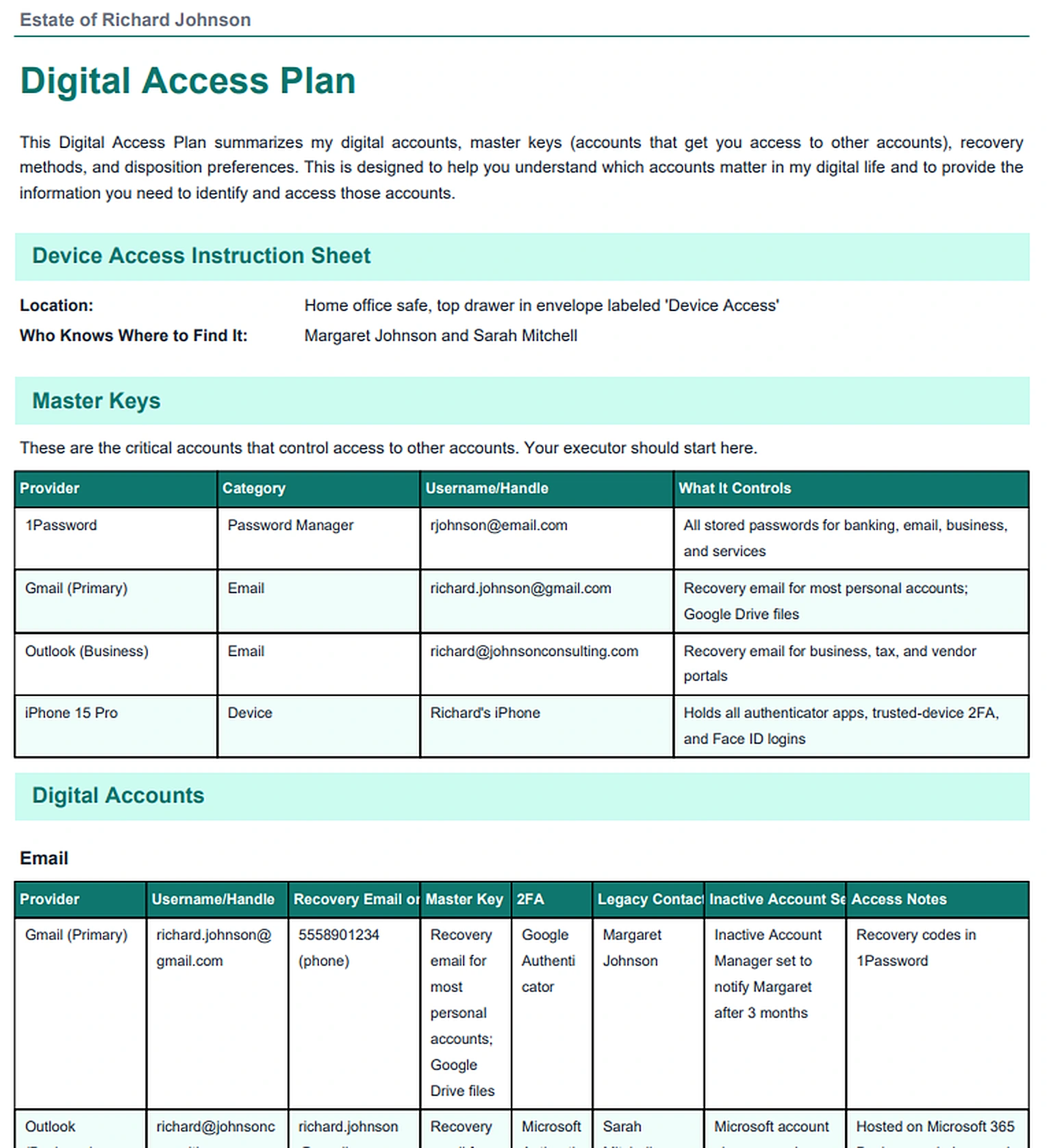
Set up digital legacy and access
Work through Apple Legacy Contact, Google account planning, device access, primary email, and other digital-readiness issues.
Organize insurance and employer benefits
Capture coverage, benefit relationships, contacts, and information families often struggle to reconstruct later.
Clarify ownership and account structure
Build a clearer picture of how assets are owned and where important financial relationships sit.
Identify key people
Executor, trustee, agents, attorneys, accountants, insurance contacts, family decision-makers, and other important relationships.
Locate important records
Identify where original documents, titles, policies, tax records, and other important materials can be found.
Clients are not just documenting their estate. They are improving it.
Progressive planning
Clients don’t have to complete everything before the process becomes useful.
A household can complete one meaningful area, stop, and return later. Each completed section adds useful information, clarifies the estate picture, and creates new opportunities for planning conversations.
- 01
One useful area
A clearer estate picture
- 02
Return later
Build on what is already known
- 03
More progress
More useful planning context
- 04
Over time
A stronger, more current estate picture
Value accumulates as the client goes.
Flexible support
Some clients will work independently. Others will need help.
Josda provides the same structured process whether a client works largely on their own, alongside an advisor, or with more hands-on support from the advisory team or trusted collaborators.
At the center
Client / household
Optional support
- Advisor
- Spouse / partner
- Trusted collaborator
The experience can flex without losing structure.
A useful estate picture
Every step builds toward something the client, advisor, and family can use.
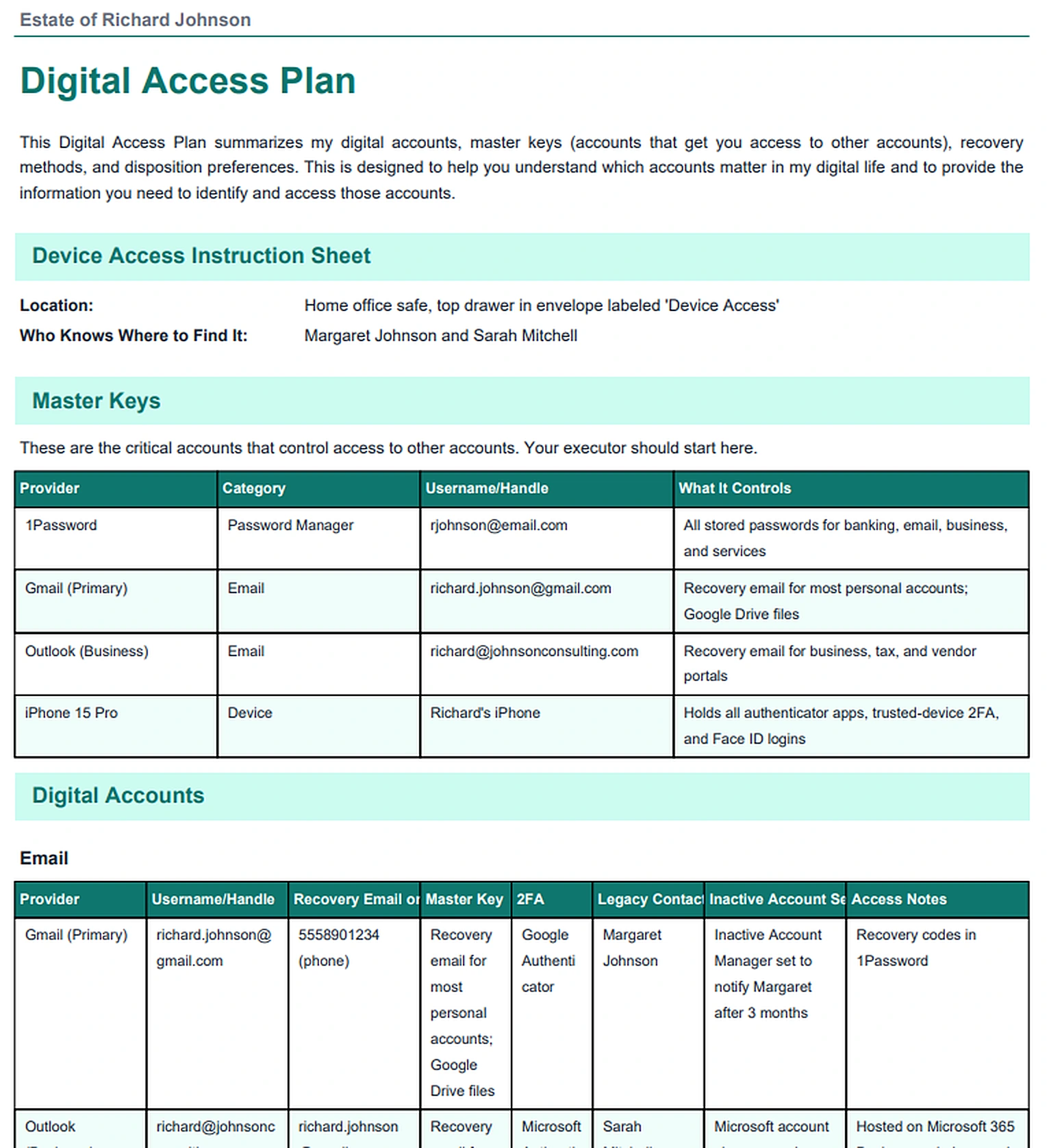
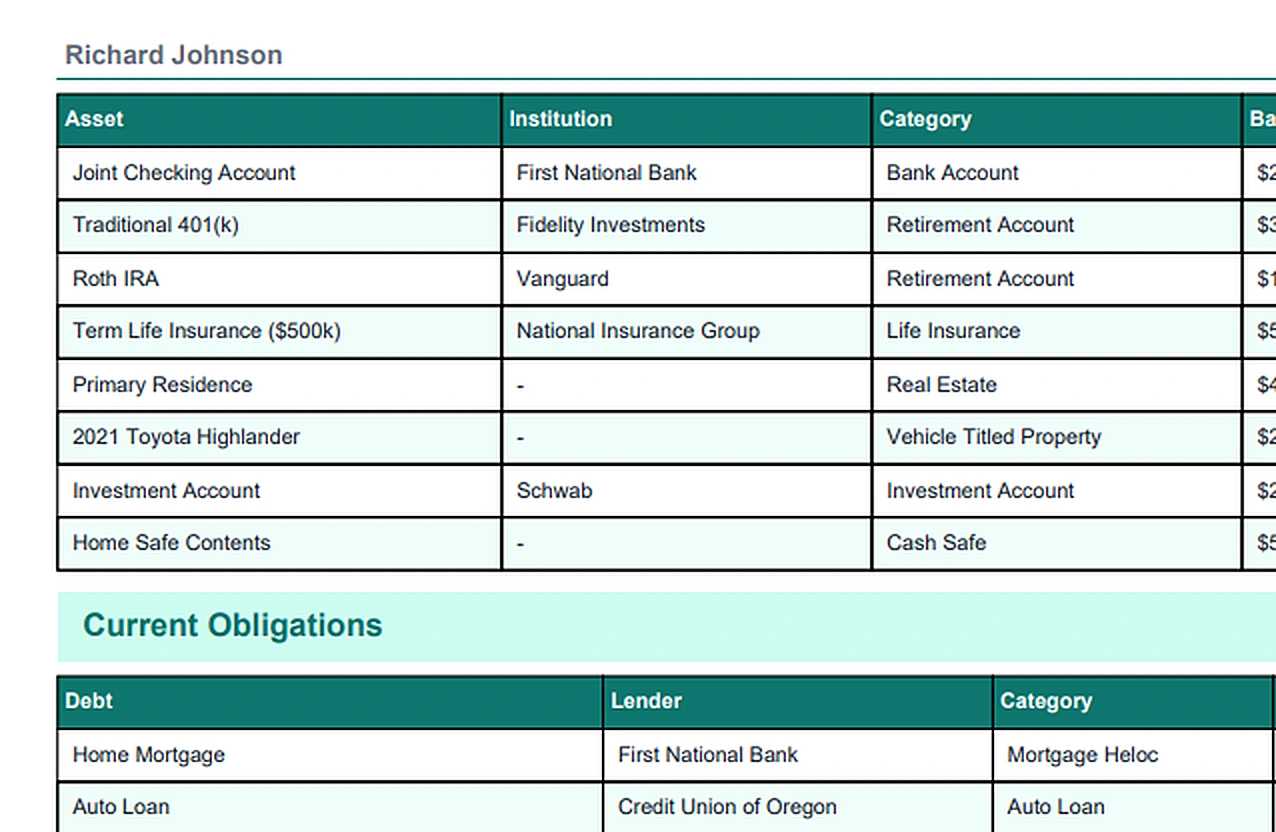
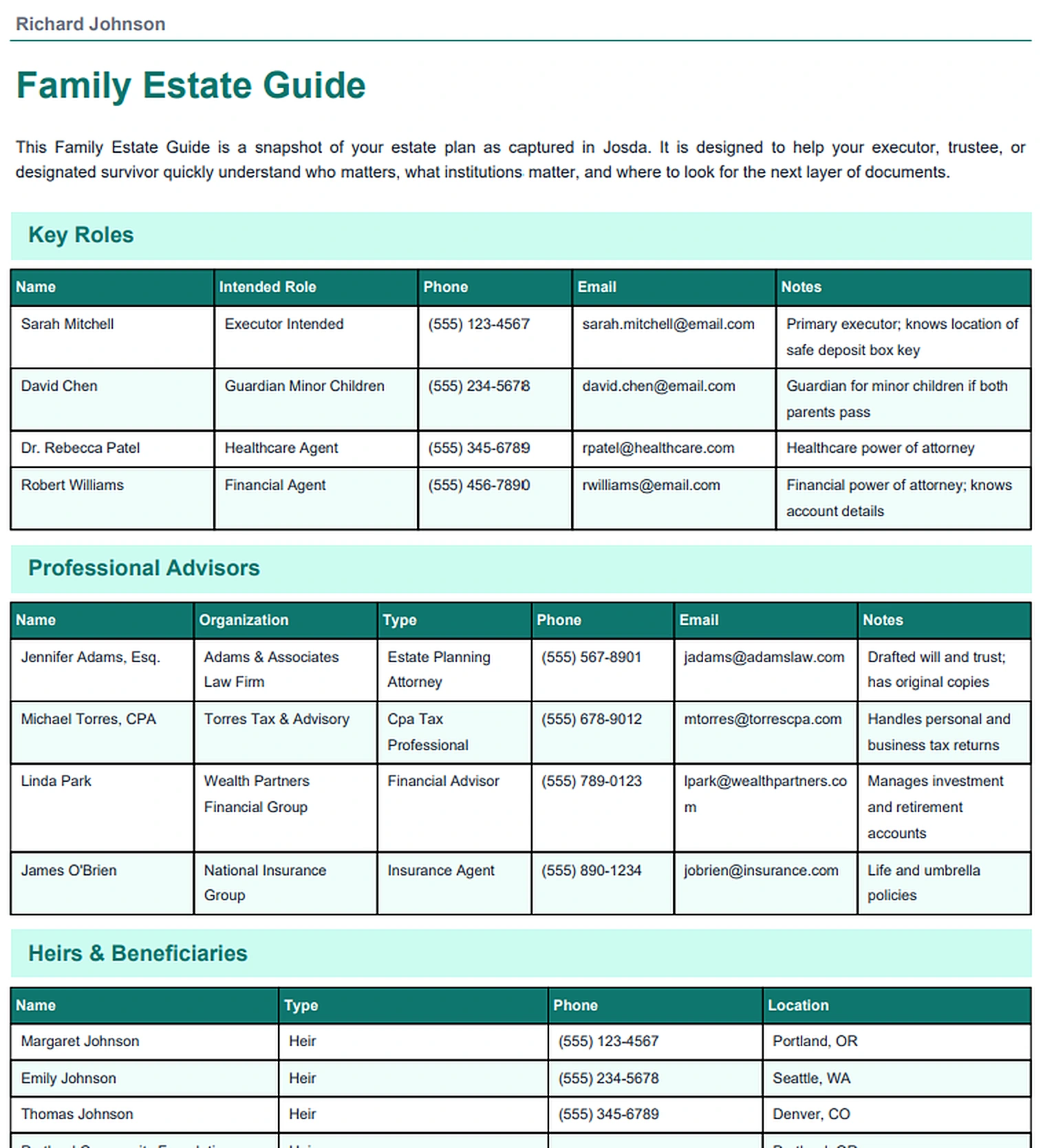
As the household progresses, Josda organizes what has been captured into a Family Estate Guide — a clearer picture of the people, financial relationships, records, and practical information surrounding the estate plan.
For the client
See what has already been organized and what may still deserve attention.
For the advisor
Give estate-planning conversations a richer, more useful starting point.
For the family
Leave a clearer resource for the people who may eventually need to act.
Present-day value + family readiness
Better preparation can improve planning today — and make things easier later.
Josda is not only about preparing for a future death or incapacity. The process can surface useful planning questions and actions now, while also leaving the household and family better prepared for the day the information may need to be used.
Useful today
Questions and actions the process can surface now.
- Beneficiary review
- Ownership and titling questions
- Insurance and benefit organization
- Overlooked accounts and assets
- Digital access
- Missing records
- Coordination with professionals
Useful later
What the family inherits when the information is needed.
- Clearer records
- Known contacts
- Better family readiness
- Easier information retrieval
- A stronger starting point when settlement begins
Security & privacy
Sensitive family information deserves serious protection.
- Secure access
- Encryption
- Privacy
- Responsible use of AI
- Household and firm permissions
See what a better client estate-planning experience looks like.
See how Josda guides the work, reduces manual effort, provides help in context, and turns client progress into something useful.